Welcome to

Spiritual Journey

Exploring the intersection of philosophy, psychology, and conscious living. Discover pathways to authenticity while contributing to collective well-being.

9 Philosophical Insights
5 Great Thinkers
Possibilities
Scroll to explore

Introduction

Embarking on a spiritual journey is a deeply personal yet universally shared experience. This introduction sets the stage for exploring how we can live authentically while contributing positively to the collective human experience.

Life, with all its twists and turns, often feels like an uncharted expedition. We find ourselves seeking purpose, connection, and understanding in a world that can be both wondrous and overwhelming. Recently, I've been pondering a question that seems ever more pressing:

"How can we live a life that's true to ourselves while also benefiting the collective?"

This isn't just a philosophical musing—it's a call to honest engagement with the complexity of being human. In a time when global challenges feel more interconnected than ever, our individual choices ripple outward.

🌿

The Thinkers We'll Explore

  • Heidegger — Existentialism & Being
  • Jung — Archetypes & Unconscious
  • Sapolsky — Neuroscience & Behavior
  • Schopenhauer — Will & Determinism
  • Nietzsche — Authenticity & Creation

Embracing Our "Thrownness"

Person standing on cliff overlooking vast landscape
Accepting where we are without resistance

Martin Heidegger (1889-1976) was a German philosopher whose work focused on existentialism and phenomenology. His concept of "thrownness" (Geworfenheit) suggests that we are all thrown into existence without choice, into a world that is already in motion.

Interestingly, this Western insight mirrors ancient Eastern wisdom. The Taoist concept of wu wei (often translated as "non-action") teaches us to work with life's natural flow rather than against it. Where Heidegger calls for "resoluteness" in facing our circumstances, the Tao Te Ching advises that "the softest thing in the world overcomes the hardest."

Practice: Embracing Thrownness

  • Honest Assessment: Examine your life circumstances without romantic illusions
  • Acceptance Without Resignation: Acknowledge your starting point without bitterness
  • Conscious Response: Respond with awareness rather than mere reaction
Unveiling the Unconscious

Carl Jung (1875-1961) was a Swiss psychiatrist whose explorations extended far beyond conventional Western psychology. Through his engagement with the I Ching, alchemical traditions, and cross-cultural spiritual practices, Jung discovered what he called the collective unconscious.

Jung's work with the I Ching revealed something profound: the 64 hexagrams of this ancient Chinese text mirror the archetypal patterns he was discovering in Western psychology. This wasn't mere coincidence but evidence that certain fundamental patterns appear across all human cultures.

Jung's archetypes are not merely psychological categories but represent the fundamental roles and developmental stages that human consciousness seems to navigate universally:

⚔️

The Hero

The journey of facing challenges and seeking growth

🌑

The Shadow

The hidden aspects we must acknowledge

📜

The Mentor

The guidance we offer and seek

🌿

The Healer

The capacity for restoration and renewal

🎭

The Trickster

The disruptive force revealing hidden truths

Navigating Determinism

"
Our awareness of determinism becomes the doorway through which genuine compassion enters.
— Interpretation of Sapolsky's Work

Robert Sapolsky, a neuroscientist and biologist, demonstrates how our behavior emerges from complex webs of genetic, neurobiological, and environmental factors. Arthur Schopenhauer (1788-1860) similarly argued that an unconscious "Will" drives our desires and actions.

Both point to the same uncomfortable truth: much of what we experience as "our" choices actually arise from forces beyond our conscious control. These Western insights find remarkable parallels in Eastern philosophy.

The Buddha's First Noble Truth identifies dukkha (suffering) as arising from our clinging and craving—what Schopenhauer called the "Will." Yet Buddhism doesn't lead to fatalism. Instead, the Middle Way teaches that awareness of these patterns becomes the path to freedom.

Key Insight

This is not fatalism—the belief that nothing we do matters. Rather, it's recognition that we are embedded within systems of causation that we cannot step outside of. However, within these systems, consciousness and attention remain meaningful.

Striving for Authenticity

Authenticity is often misunderstood as the elimination of all masks or social roles. In reality, masks are not only inevitable but necessary for survival and meaningful connection.

Friedrich Nietzsche (1844-1900) understood this when he advocated for conscious self-creation rather than discovery of some pre-existing "true self." Authenticity becomes the art of skillful mask-wearing: being truthful about which mask the situation requires while maintaining awareness of the mask as mask.

Nietzsche's vision of self-creation finds an interesting counterpart in the Taoist sage Zhuangzi, who practiced "sitting in forgetfulness"—letting go of artificial distinctions while remaining fully engaged with life.

Cultivating Authenticity

  • Name Your Current Masks: What roles are you playing right now?
  • Honor Necessary Performances: Wear required roles consciously rather than resentfully
  • Maintain Inner Awareness: Stay connected to your inner experience
  • Embrace Paradox: Hold the tension between social necessity and personal truth
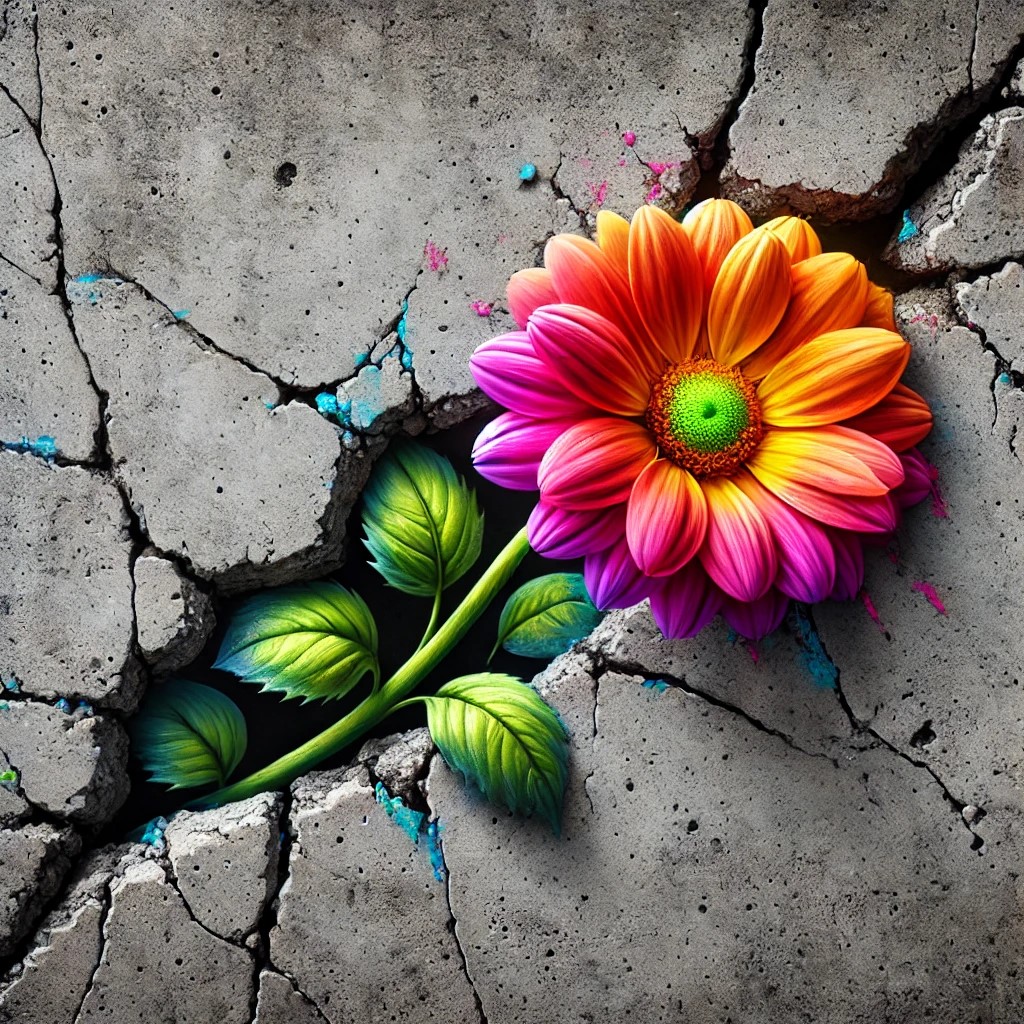
Flower breaking through concrete symbolizing resilience
Growth within constraints

The Complex Dance

🕸️

Interconnected Healing

Jung's concept of synchronicity suggests that individual psychological development and collective health may be connected through deeper patterns than mechanical cause-and-effect.

When we do our inner work—integrating our shadows, wearing our masks consciously, accepting our thrownness—we may contribute to collective healing in ways we cannot directly measure.

The relationship between individual authenticity and collective good is more complex than simple harmony. Sometimes authentic self-expression serves the community; sometimes it challenges or disrupts necessary social structures.

This insight bridges many wisdom traditions. The Hindu understanding that individual consciousness (Atman) and universal consciousness (Brahman) are ultimately one suggests that personal growth and collective wellbeing are more interconnected than they appear.

The Buddhist concept of interdependence teaches that "if you want to take care of yourself, take care of others; if you want to take care of others, take care of yourself."

Approaches to Collective Well-being

01
Inner Work as Service

Taking responsibility for your psychological development reduces burden on others

02
Skillful Advocacy

Bring consciousness to collective action

03
Humble Contribution

Offer gifts while recognizing individual perspective is limited

Practical Steps

1
🌅

Daily Awareness

  • Morning Assessment: Honestly assess your current state
  • Attention Training: Develop practices that strengthen conscious attention
2
🌑

Shadow Work

  • Notice Projections: Ask what disowned aspect might be reflected
  • Integrate: Acknowledge rather than eliminate difficult aspects
3
🎭

Archetypal Awareness

  • Identify Archetype: Which pattern are you embodying now?
  • Wear Masks Consciously: Practice awareness in social roles
4
🌿

Environmental Design

  • Create Conditions: Design surroundings to support growth
  • Accept Constraints: Work skillfully within systems
5
🤝

Community

  • Local Participation: Engage in immediate community
  • Humble Service: Offer gifts, stay open to learning

Finding Hope

Hope, in this context, is not optimism about outcomes but rather trust in the meaningfulness of conscious engagement itself. Even within systems of constraint, even while wearing necessary masks, even with partial understanding—our awareness and intention matter.

This understanding resonates across wisdom traditions. The Taoist sage finds peace in aligning with the natural flow of existence, while the Buddhist practitioner discovers that suffering lessens through accepting impermanence.

🌊

Embedded Meaning

Meaning emerges from conscious participation in life's patterns

🕸️

Interconnected Healing

Individual work contributes to collective healing

🌟

Present Fullness

Each moment contains its own completeness

🧘

Meditation Room

Step into our digital sanctuary for guided breathing exercises and moments of stillness.

In the midst of philosophical exploration and self-discovery, it's essential to pause and return to the present moment. Our meditation room offers a space to breathe, center, and reconnect with your inner wisdom.

🫁
Guided Breathing

Visual breathing cues to calm your nervous system

🎵
Audio Guides

Optional soothing background sounds

⏱️
Custom Duration

Choose sessions from 1-20 minutes

Enter Meditation Room

Begin Your Journey Today

Join a community of seekers exploring consciousness, philosophy, and authentic living.

This exploration is necessarily ongoing and collaborative. None of us can see the whole picture; each perspective adds to our collective understanding. When you join, you become part of a movement toward more conscious engagement with life.

500+ Journeyers
52 Weekly Reflections
5 Wisdom Traditions

Join fellow seekers who receive our weekly reflections:

A
M
S
J
+500

Join the Journey

Get weekly insights on philosophy, mindfulness, and conscious living delivered to your inbox.

📬 Weekly reflections
🎁 Exclusive content
🔒 Privacy protected
🔒 No spam, ever
Unsubscribe anytime